Core Team
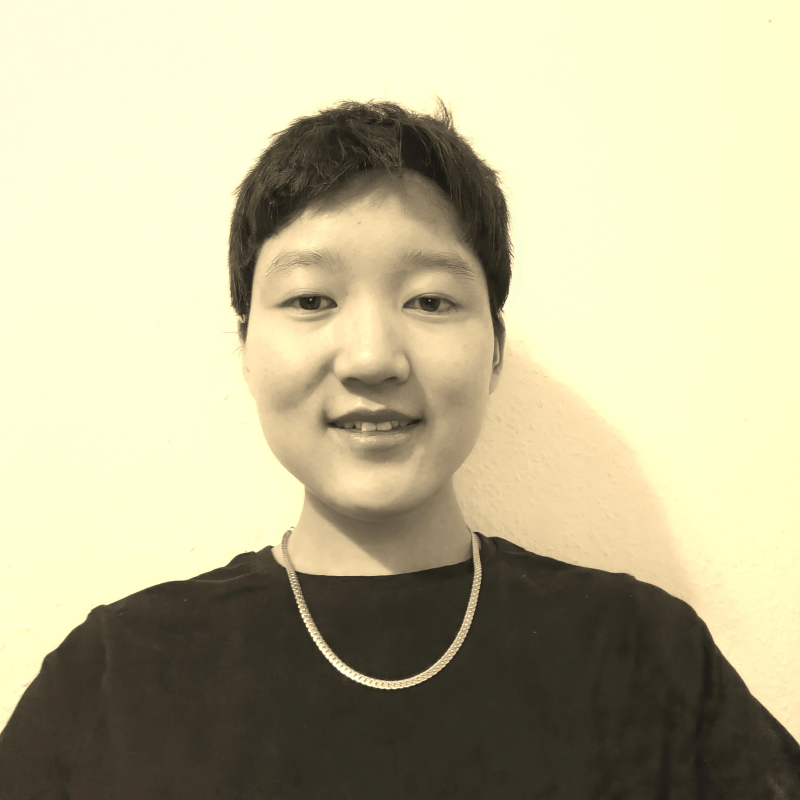
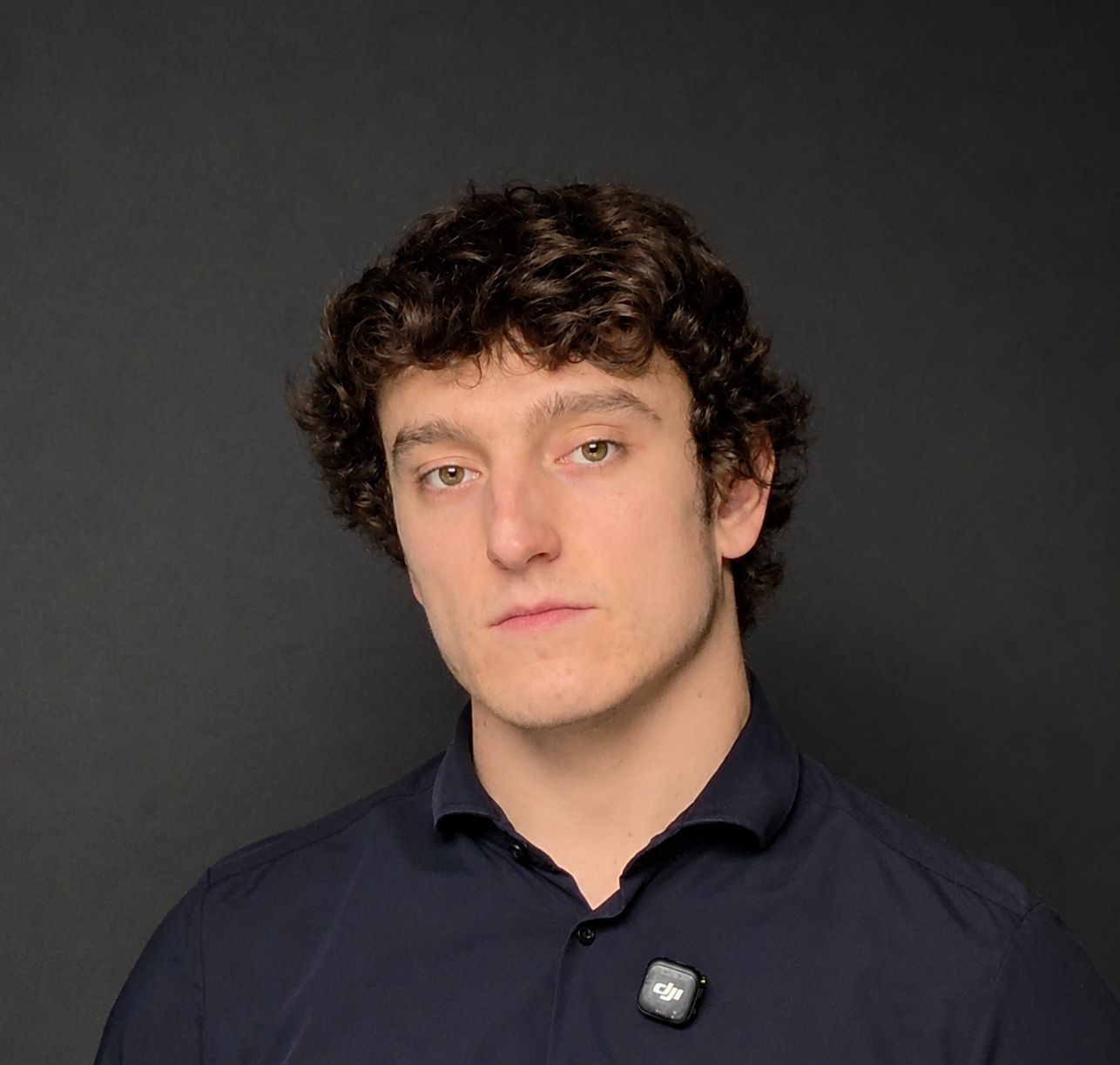
Ning Wang
Multimodal AI & RL
PhD Researcher ETHAbout
Ning Wang is a PhD researcher at ETH Zurich working at the intersection of foundation models, time-series intelligence, and autonomous scientific discovery. His work focuses on building the next generation of AI systems that can reason over complex temporal data, support high-stakes decision-making, and accelerate research itself. Rather than treating AI as a static prediction tool, he is interested in systems that continually improve, adapt across domains, and become genuinely useful in scientific and industrial settings. He brings a broad research background spanning large language models for mathematics, coding, science, safety, genomics, reinforcement learning, robotics, and AI for education. This breadth gives his work an unusually integrative character: he combines strong theoretical instincts with an eye for practical deployment, especially in environments where reliability, structure, and real-world value matter. A graduate of ETH Zurich in Computer Science at both the bachelor’s and master’s level, he represents a new generation of researchers building AI not only to understand the world, but to operate meaningfully within it.
Projects
Publications
Research Areas
Project 1
Time-Series Foundation Models for Science and Industry
This project aims to develop next-generation Time-Series Language Models (TSLMs) that can serve as foundation models for complex temporal data across domains such as healthcare, manufacturing, maintenance, and financial markets. The work explores new architectures, training paradigms, and scaling strategies that allow models to learn richer representations from sequential data, reason over long time horizons, and transfer effectively across tasks. The broader goal is to move beyond narrow forecasting systems toward more general-purpose temporal intelligence that can support decision-making in dynamic real-world environments. Scientifically, the project investigates how language-model-inspired approaches can be extended to time-series settings in a way that is both performant and efficient. This includes questions around representation learning, multimodal fusion, model scaling, interpretability, and the generation of rationales that make outputs more useful in expert settings. In healthcare and genomics in particular, such systems could support earlier detection, better risk modeling, and improved understanding of biological dynamics. By treating time-series modeling as a foundation-model problem, the work contributes to a broader rethinking of how sequential scientific and operational data should be modeled. Many industries generate enormous volumes of temporal data but still rely on fragmented analytics pipelines and narrow predictive tools. A robust TSLM layer could unlock more adaptive monitoring, anomaly detection, maintenance planning, process optimization, and trading intelligence across sectors. Because these capabilities address clear operational bottlenecks and can be embedded into existing enterprise workflows, they are especially well positioned for translation into deployable AI products and high-value industrial collaborations.
Project 2
Autonomous AI Systems for Research and Discovery
This project explores agentic AI systems designed to assist with research, discovery, and knowledge synthesis. The core idea is to build systems that can do more than retrieve information: they should be able to formulate questions, explore evidence, connect ideas across sources, and iteratively improve their own outputs. Ning’s work investigates how collections of models, tools, and reasoning processes can be orchestrated into autonomous research systems that support scientists in navigating increasingly complex bodies of knowledge. From a scientific perspective, this work sits at the frontier of machine reasoning, self-improvement, and AI for science. It raises important questions about how autonomous systems evaluate evidence, decompose research problems, coordinate specialized submodels, and generate hypotheses that are both novel and grounded. It also touches on a deeper ambition: creating AI systems that do not merely assist human research workflows, but actively expand the pace and scope of discovery. Such systems could become powerful instruments in domains where the literature is vast, the search space is difficult, and meaningful insight requires synthesis across disciplines. The commercial implications are substantial because research-intensive sectors increasingly need tools that transform information overload into actionable insight. Organizations in biotech, healthcare, advanced manufacturing, and R&D-driven industries all face the same challenge: extracting value from fragmented data, technical literature, and internal knowledge at scale. Autonomous research systems that can accelerate analysis, surface opportunities, and support expert decisions would offer clear strategic advantages. That makes this line of work especially compelling wherever scientific complexity, knowledge bottlenecks, and applied innovation intersect.
Other team members
















Pre-Doctoral Researcher



















Interested in collaborating?
We are always looking for talented students, researchers and industry partners.
