
Pre-Doctoral Researcher
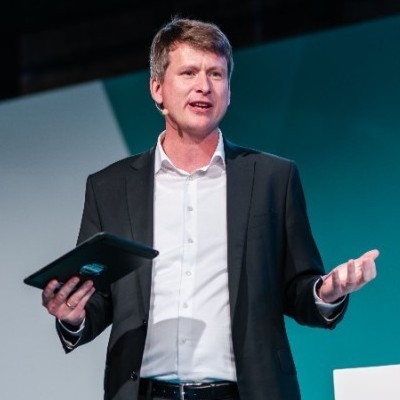
Maximilian Weigl
Industry Applications of TSLMs
Pre-Doctoral ResearcherAbout
Maximilian Weigl works at the intersection of AI strategy, market intelligence, and applied commercial research. At ASL, he focuses on identifying where time-series language-action models (TSLAMs) can move beyond technical promise and create real value in industry. His work combines a strong analytical finance background with a practical understanding of how emerging technologies are adopted in complex business environments. With training in finance and strategy from WU Vienna and experience spanning hedge funds, venture debt, and international market analysis, Maximilian brings a distinctly commercial lens to frontier AI research. Rather than treating deployment as an afterthought, he examines which use cases are operationally realistic, economically meaningful, and scalable across enterprise settings. His research helps connect technical capability with business relevance, especially in sectors where reliability, speed, and decision quality are mission-critical.
Research Areas
Project
Identifying High-Value Industrial Applications for TSLAMs
Time-series language-action models (TSLAMs) have attracted growing attention for their ability to combine sequential data understanding with reasoning and action. Maximilian’s project investigates where these systems can generate meaningful value outside the lab, with a particular focus on commercially relevant enterprise applications. The work evaluates industry verticals based on process complexity, automation potential, operational pain points, and the feasibility of integrating TSLAMs into existing workflows. Rather than asking only what these models can do, the project asks where they should be deployed to create measurable impact. From a scientific perspective, the project contributes to a more systematic framework for matching advanced AI capabilities with real-world task environments. It helps define the conditions under which TSLAMs are technically feasible, operationally robust, and economically justified. This includes questions around data quality, temporal reasoning, deployment constraints, and failure tolerance in high-stakes settings. By structuring use-case selection more rigorously, the work creates a bridge between model development and implementation science, helping guide future research toward applications with both technical depth and practical significance. The commercial relevance is especially strong in industries where downtime, delayed decisions, or fragmented knowledge flows carry high costs. Predictive maintenance, industrial monitoring, and process optimization are prominent examples, as these environments reward systems that can detect anomalies early, reduce manual burden, and support faster decision-making. By identifying where TSLAMs can improve reliability, continuity, and operational efficiency, the project highlights pathways for translating frontier AI into deployable solutions with clear value for industrial users and strong potential for broader adoption.
Other team members

















Pre-Doctoral Researcher



















Interested in collaborating?
We are always looking for talented students, researchers and industry partners.
